
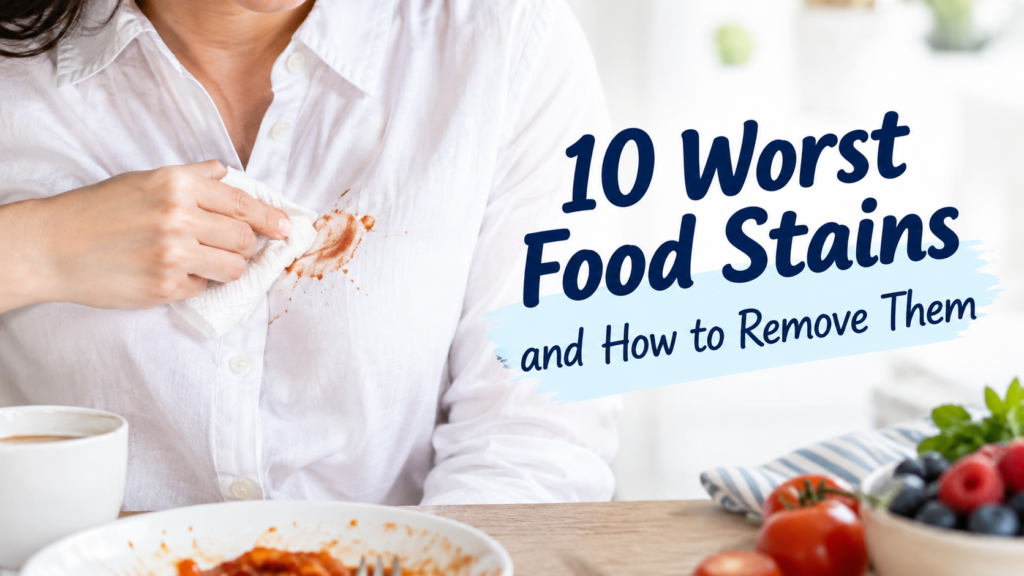
Food is an important part of life, and eating it is one of the best things about it. The problem starts when that food ends up somewhere it shouldn’t. A small amount of Alfredo sauce can make a plate of tortellini taste amazing, but the same sauce can leave a terrible mark on your favorite blouse.
There isn’t a way to keep your clothes and belongings completely free from food stains unless you cover everything in plastic or stop wearing clothes while you eat. A much better option is to learn a few simple ways to deal with food spills when they happen.
Time is important when you’re dealing with food stains, so keeping a stain remover pen nearby can be helpful. These small pens are usually about the size of a highlighter, so they’re easy to keep in a handbag, car, desk drawer, or other convenient place. They won’t remove every stain, but they can be a useful first step.
The main thing to remember is that different stains need different treatments. Here are 10 of the worst food stains and some of the best ways to remove them.
Contents
- Coffee or Tea
- Gum
- Peanut Butter
- Mustard
- Berry Juice
- Tomato-based Sauces
- Baby Food
- Red Wine
- Chocolate
- Cooking Grease or Butter
1: Coffee or Tea
Spilling a little coffee or tea on your shirt may not seem like a big problem at first. The stain doesn’t look as bad as ketchup or mustard. But once coffee or tea dries, it can become surprisingly difficult to remove.
Even after you think you’ve cleaned it, a faint yellow or brown outline can sometimes appear again. Before you decide to give up coffee forever, try these methods to save your clothes.
- Rinse fresh stains with hot water. If you notice the coffee or tea stain right away, rinse it with hot water. This can work well on fabrics that can safely handle hot water and are colorfast.
- Treat older stains with dishwashing liquid. If the stain has already dried, soak the area with dishwashing liquid or use a commercial spot remover.
- Try borax on old, set-in stains. Borax is an oxidizing agent that can sometimes help break down old stains. Mix 2 tablespoons of borax with 1 cup of water and pour the mixture over the stain. Leave it for about 10 minutes, then rinse it. Wash the garment as you normally would.
Dealing With Mystery Stains
Sometimes you find a stain but have no idea where it came from. When that happens, check the care label on the item before trying anything.
Start with the gentlest cleaning method you can. The color and location of a stain may also give you a clue. For example, a green mark on your jeans could be pesto from dinner, but it could also be grass.
2: Gum
Gum may look like a nightmare to remove, but it can actually be fairly easy if you use the right method. The fact that it’s sticky and gooey makes it unpleasant, especially when the gum isn’t yours.
Try these steps to remove gum from fabric or carpet:
- Freeze the gum. If the gum is on clothing, you can place the item in the freezer. For carpet, put a few ice cubes over the gum or use a cold pack. Leave it for about 15 minutes, or until the gum becomes hard.
- Scrape it away. Once the gum is hard, carefully scrape off as much as you can. A butter knife or another dull-edged tool can work well.
- Remove the leftover residue. After most of the gum is gone, gently rub the remaining spot with white vinegar. Then blot the area to remove the residue.
- Wash normally. Once the gum is completely removed, clean the fabric or carpet as you normally would.
3: Peanut Butter
Peanut butter is delicious with jelly on bread, but it’s not nearly as appealing when it ends up on your clothes.
Start by carefully scraping away as much of the solid peanut butter as possible. If the stain is small, apply some dishwashing liquid and gently scrub the area. Then rinse it with hot water, as long as the fabric can safely handle the heat.
For a large or set-in peanut butter stain, you may need a dry cleaning solvent or a commercial spot remover. Always test the product on a hidden area of the fabric first and follow the manufacturer’s instructions.
A Detergent That Works
Using dishwashing liquid on a greasy fabric stain may sound unusual, but it can work surprisingly well.
You can see why with a simple test. Put a drop of oil on a plate and spread it around. Then add a drop of dishwashing liquid. You’ll notice that the detergent starts breaking up the grease.
That’s exactly why dishwashing liquid can be useful for many difficult household stains.
4: Mustard
Mustard can create a surprisingly wet stain, so try to deal with it quickly. Blot the stain first to keep it from spreading. Once you’ve removed most of the liquid, carefully scrape away any solid mustard that remains.
Mustard can act like a dye on fabric, which makes it especially difficult to remove.
Start by applying a commercial spot cleaner to the stain. Then soak the garment in cool water with color-safe bleach. If the stain is still there, you can try a dry cleaning solvent.
Always check the care instructions for the fabric and follow the directions on any cleaning product you use.
5: Berry Juice
Blueberries are great in muffins, breakfast dishes and sometime in blueberry smoothies , but their dark purple stains can be a serious problem, especially on light-colored fabric. Grape juice and cranberry juice can cause similar stains.
To treat berry stains, mix equal parts dishwashing liquid and white vinegar. Apply the mixture to the stain and gently rub it in. Leave it for about 15 minutes.
Rinse the area with warm water and then wash the garment normally. You can repeat the treatment if the stain doesn’t disappear completely.
For a white tablecloth, fabric bleach may also be an option if the material can safely handle it.
6: Tomato-based Sauces
Tomato based stains can be difficult to remove, especially if heat is used too soon. Avoid hot water when treating these stains, and don’t put the stained garment in the dryer until you’re sure the stain is gone.
Heat can make tomato stains much harder to remove.
Marinara sauce, ketchup, barbecue sauce, pizza sauce, and salsa can generally be treated in a similar way.
Try these steps:
- Soak the stain in cold water. Add 2 tablespoons of white vinegar and 1 tablespoon of dishwashing liquid to the water. Let the stained area soak for at least 30 minutes.
- Rub the stain gently. After soaking, gently rub the spot to help loosen any remaining discoloration. Then rinse it.
- Repeat if necessary. If the stain is lighter but still visible, repeat the same process. As long as you haven’t used heat, you may still be able to remove the stain.
- Use a commercial stain remover. If the stain is still noticeable, apply a commercial stain remover and follow the manufacturer’s instructions for soaking.
- Try a stronger treatment if needed. A dry cleaning solution may help with a very stubborn stain. Some people also use WD-40 as a DIY option. If you try it, test it on a hidden part of the fabric first. Afterward, wash the area with cold, soapy water to remove any oily residue.
7: Baby Food
Babies can be surprisingly good at throwing food. A spoonful of pureed carrot can end up on clothes, curtains, furniture, or even across the room.
Baby food comes in many different varieties, so the best treatment can depend on what caused the stain. However, these basic steps can help with many baby food stains on soft surfaces:
- Remove as much food as possible. Scrape away any leftover food before treating the stain. It’s also easier to remove the stain when it hasn’t dried yet.
- Pretreat the fabric. Use a commercial stain remover and follow the product’s instructions. If the stain has dried, you may need to soak the fabric for several hours.
- Wash the fabric normally. After soaking, wash the item as usual. Don’t put it in the dryer yet because heat can set any remaining stain. Let the fabric air dry instead.
- Repeat if needed. If the stain remains, repeat the treatment.
- Try an alcohol-based cleaner for stubborn stains. An alcohol-based cleaner may help with a stain that refuses to disappear. In some cases, alcohol-based hand sanitizer can also work.

8: Red Wine
A spilled glass of red wine can quickly turn a nice evening into a cleaning emergency. The first thing to do is prevent the stain from spreading.
Baking soda and salt can both help absorb fresh, wet wine stains. Apply one of them to the stain as soon as possible. You can also place a paper towel behind the stained fabric to help absorb the liquid.
For a large stain, place salt on a paper towel or other absorbent material, put the stained fabric over it, and add another layer of salt on top. Let it sit for about 10 minutes.
After that, rinse the stain with club soda. Another option is to use a mixture of equal parts dishwashing liquid and white vinegar after applying the salt.
Red wine can quickly stain fabric fibers, which is why treating the spill immediately is important. It’s also a good idea to keep a stain remover nearby if you’re wearing delicate or light-colored clothing.
9: Chocolate
Chocolate tastes great in brownies, cakes, and candy, but it’s much less welcome on your clothes. Chocolate stains can be similar to tomato-based stains because heat can make them more difficult to remove.
If you haven’t washed the chocolate stain in hot water yet, try these steps:
- Turn the garment inside out. Work on the back of the stain rather than the front. This helps push the chocolate away from the fabric instead of deeper into it.
- Place paper towels underneath. Put several layers of paper towels under the stained area with the stain facing down.
- Make a cleaning solution. Mix 1 teaspoon of dishwashing liquid, 1/2 teaspoon of ammonia, and 1 cup of cool water.
- Blot the stain. Use a soft, lint-free cloth to blot the chocolate stain with the mixture. Don’t rub it. The goal is to move the chocolate onto the paper towels instead of pushing it further into the fabric.
- Try hydrogen peroxide if needed. If the ammonia mixture doesn’t work, you can try a 3 percent hydrogen peroxide solution. Apply it to the stain and let it sit for a couple of minutes, then rinse the area well.
Be careful with hydrogen peroxide because it can remove color from some dark fabrics. Always test it on a hidden part of the fabric first.
10: Cooking Grease or Butter
Cooking grease and butter can be some of the hardest food stains to remove. Once grease gets into fabric, it can seem like it doesn’t want to leave.
The good news is that a grease stain doesn’t necessarily mean your favorite shirt is ruined.
Grease stains can often be treated with products that are gentle on many fabrics. The goal is to break down the grease and keep it suspended in water so it can be washed away.
Dishwashing liquid is a good place to start because it is designed to break down grease.
Apply dishwashing liquid directly to the stain using a sponge or cloth and gently rub the area. Then rinse it thoroughly.
If you’re working with a thick, durable fabric, you can also use a soft brush, such as an old toothbrush, to gently scrub the stain.
If dishwashing liquid doesn’t completely remove the grease, you can try an alcohol-based solution. Some commercial spot cleaners contain alcohol, so check the ingredients before buying one.
Hand sanitizer, which is mostly alcohol, may also work. You can also try rubbing alcohol from your medicine cabinet.
If the grease stain is still there, another option is wood soap or a wood cleaning solution made for kitchen cabinets. These products can sometimes lift grease from fabric.
Before using a wood cleaner, always test it on a hidden part of the fabric to make sure it won’t damage or discolor the material.
Apply the cleaner to the stain and let it sit for about 10 minutes. Then wash the garment normally. You may need to repeat the process before the grease stain disappears completely.
Frequently Asked Questions
Can natural remedies be effective for removing tough food stains?
Yes, some natural remedies can work surprisingly well on tough food stains when used correctly. For example, white vinegar can be useful for berry stains, while baking soda can help absorb grease and other wet stains.
However, always check the fabric care label and test a cleaning method on a hidden area before treating the entire stain.
How can I prevent food stains from setting in fabric?
Treat food stains as soon as possible. Quickly remove any excess food and rinse the stain using the appropriate water temperature for the fabric.
Avoid using heat until the stain has been completely removed. Hot water, dryers, and other sources of heat can make some stains harder to remove permanently.