
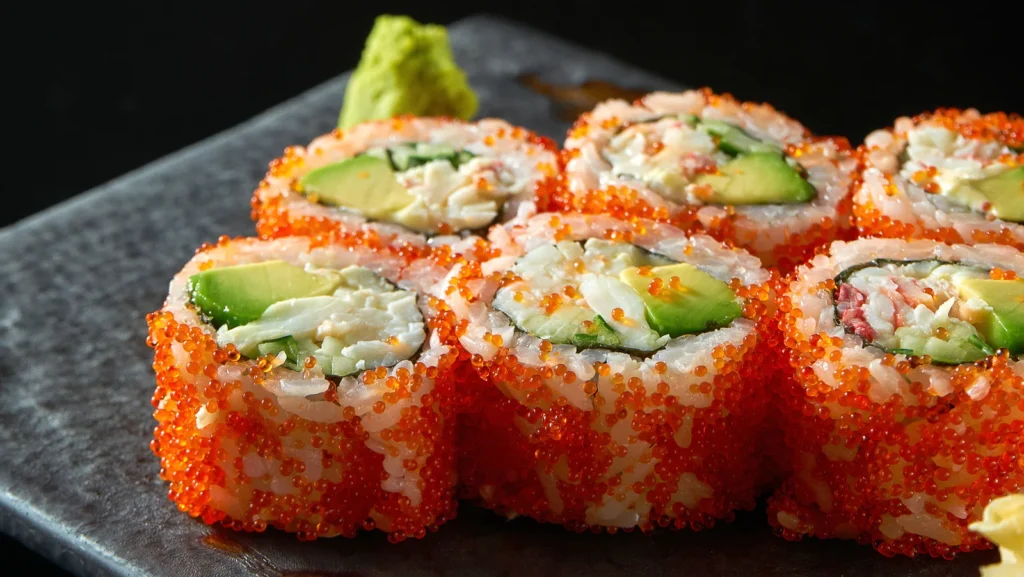
Ordering sushi can feel a little confusing for many people. You have to choose the type of fish, decide which combinations you want, and understand menu terms you may have never heard before.
If you’ve ever looked through a sushi menu and wondered, “What exactly is tobiko?” or noticed the tiny colorful eggs on top of a sushi roll and got curious, keep reading to learn more about it.
What Is Tobiko?
Tobiko looks similar to tiny caviar, and that’s because it actually is a type of caviar. It is made from flying fish eggs, also called roe. Traditional caviar is usually larger, darker in color, and made from sturgeon eggs instead.
Flying fish live in warm and tropical oceans. They are called flying fish because they can glide above the surface of the water for short distances. Their ripe and unfertilized eggs are very tiny, usually smaller than 1 mm. These eggs are collected and cured with salt so they can be preserved and eaten later.
Tobiko eggs are usually golden orange to bright reddish-orange in color and are widely used in Japanese cuisine. Because of this, tobiko is often called “Japanese caviar.”
What Does Tobiko Taste Like?
Since tobiko is cured in salt, it has a salty flavor, but it also has a light sweetness. Some people also notice a small hint of citrus flavor. Even though the eggs are tiny, tobiko still has a slight crunch or popping texture when eaten. This texture becomes softer when combined with sushi rolls.
The mild briny flavor of tobiko makes it a tasty addition to many dishes. It is also rich in omega-3 fatty acids, which are essential fats that our bodies cannot naturally produce.
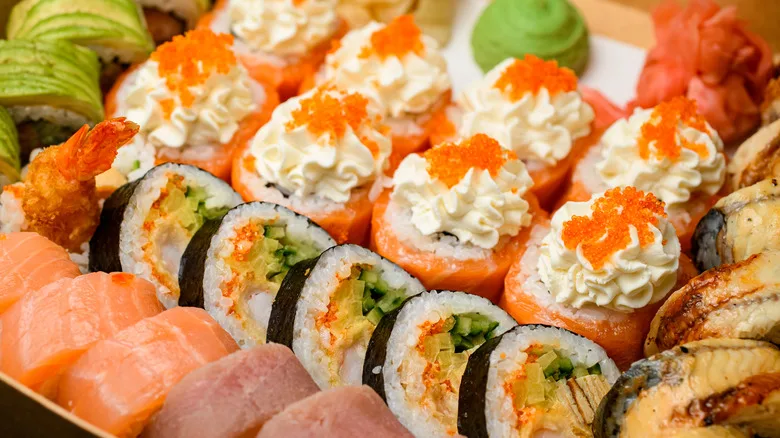
Tobiko vs. Caviar
The biggest differences between tobiko and caviar are the fish species, size, color, and price.
Caviar comes from sturgeon, while tobiko comes from flying fish. Caviar eggs are larger and darker, while tobiko eggs are much smaller and brighter in color. Because sturgeon are heavily overfished, caviar is also much more expensive than tobiko.
The flavor of caviar depends on the type, but it is generally delicate and salty. It is often served as the main attraction or as a luxury garnish.
Tobiko works a little differently. Its smaller size and texture make it more of a supporting ingredient in dishes rather than the center of attention. Even though it is smaller, tobiko can actually have a stronger salty taste than caviar.
Types of Tobiko
Different types of tobiko are mainly identified by their color. Tobiko eggs easily absorb flavors and colors when mixed with other ingredients. Some producers also use food coloring to create brighter shades.
Golden
Golden tobiko is the natural and fresh form of tobiko. It often has a slightly orange color, especially when seen in large amounts. This version is simply cured with salt and does not contain extra flavors or dyes.
Red-Orange
This type of tobiko is usually flavored only with salt but colored with bright reddish-orange dye to improve its appearance.
Red
Red tobiko is commonly made using ingredients like beets or chili peppers. Beet-based tobiko has a mild, earthy, and slightly sweet flavor, while chili-based tobiko adds a spicy kick.
Green
Green tobiko is usually flavored with wasabi, giving it a spicy and sharp taste. Food coloring is often added to create a stronger green color. Other ingredients may include sugar, mirin, soy sauce, sake vinegar, and dashi.
Yellow
Yellow tobiko often gets its color and flavor from citrus fruits like yuzu. Sometimes yellow food dye is also added to brighten the color.
Black
Black tobiko has a rich umami and slightly nutty flavor. It is usually colored with squid ink, although some producers may use a mix of food dyes to create a darker black shade.
How Is Tobiko Used?
The salty flavor and crunchy texture of tobiko make it perfect for topping sushi and sashimi. Its bright colors also make dishes look more attractive. Tobiko is sometimes mixed into spicy mayo, sauces, or dips because it keeps its shape well.
You may also see tobiko used as a topping for seafood dishes or mixed into salads. In some cases, it is served as an hors d’oeuvre on crackers, spoons, or even used instead of other types of caviar on blinis.
Where to Buy Tobiko
Tobiko may not be a regular grocery item for everyone, but you can usually find it at stores like Whole Foods. Japanese and other Asian grocery markets also commonly carry tobiko.
Can also check seafood recipes.