
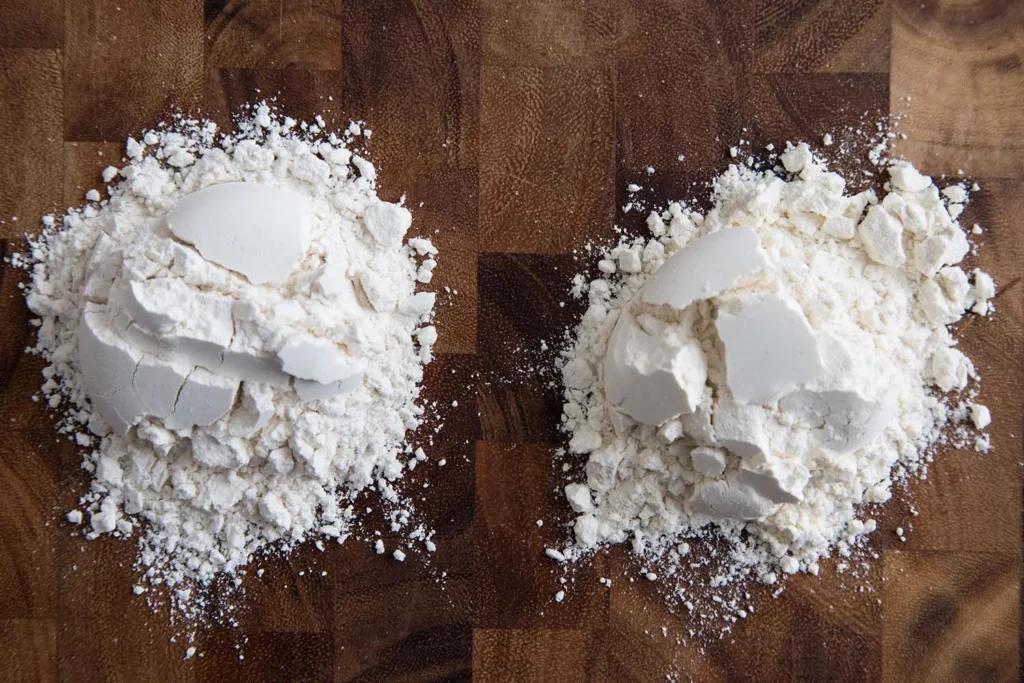
When you’re shopping in the baking aisle at the grocery store, you may have noticed that some bags of all-purpose flour are labeled as bleached, while others are marked unbleached. Have you ever wondered why? What is the difference between the two? If you accidentally buy bleached flour instead of unbleached (or the other way around), can you still use it in your baking recipe? And is bleached flour bad for you?
The good news is that we have the answers. Although both types of flour are made from the same grain, they are processed in different ways. Bleached flour is treated with chemicals, while unbleached flour is allowed to age naturally. Keep reading to learn everything you need to know about bleached vs unbleached flour.
What Is Bleached Flour?
Bleached flour is all-purpose flour that has been treated with chemicals like chlorine dioxide and benzoyl peroxide. These chemicals speed up the natural aging process of the flour, giving it a whiter and brighter appearance.
The bleaching process also creates a finer grain, making the flour softer and lighter. As a result, baked goods made with bleached flour often have a fluffier texture and more volume than those made with naturally aged, unbleached flour.
Is Bleached Flour Bad For You?
We’re not doctors or scientists, but based on current information, bleached flour is not considered bad for you. The chemicals used during the bleaching process are added in very small amounts and are not considered harmful for normal consumption.
For example, when chlorine is used in the bleaching process, it goes through a chemical reaction and forms chloride. Interestingly, chloride is also found in bottled water, where it is often listed as an electrolyte or mineral instead of anything related to bleaching.
When it comes to nutrition, there is very little difference between bleached and unbleached flour. The bleaching process may reduce the amount of vitamin E slightly, but unbleached flour naturally contains only a small amount of this vitamin to begin with.
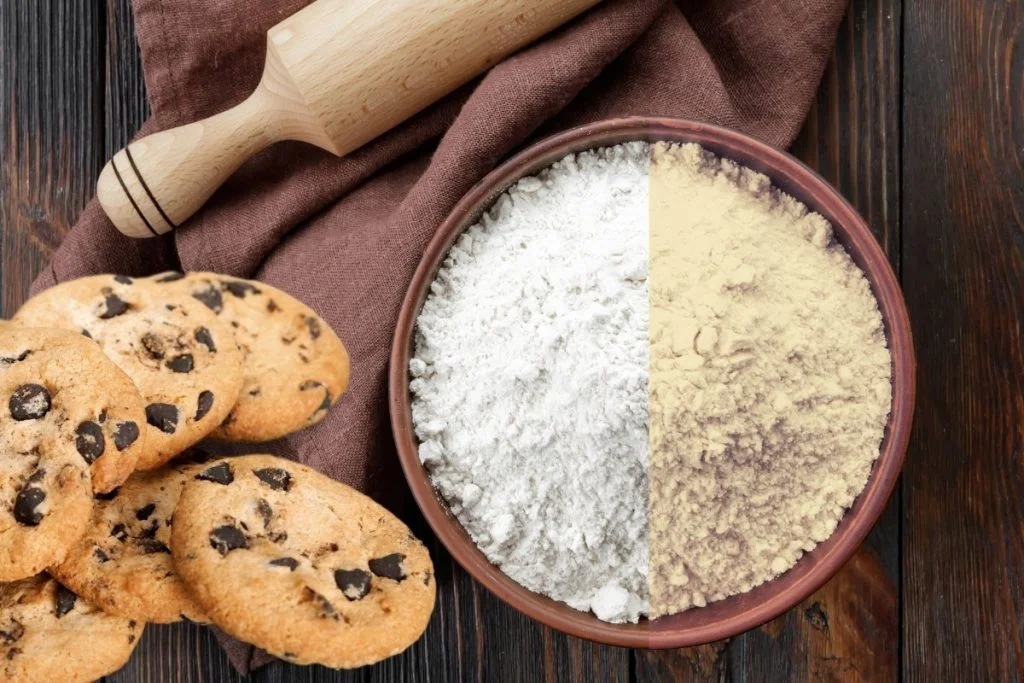
Bleached vs Unbleached Flour: What’s the Difference?
- Chemicals: Bleached flour is treated with chemicals, while unbleached flour is chemical-free.
- Production time: Bleached flour takes less time to produce than unbleached flour.
- Aging Process: Bleached flour is aged using chemicals, while unbleached flour ages naturally through exposure to air.
- Grain size: Bleached flour has a finer grain, while unbleached flour has a slightly larger grain.
- Volume and Texture: Bleached flour creates baked goods that are lighter, fluffier, and have a finer texture. Unbleached flour produces a slightly denser texture with a little less volume.
- Color: Bleached flour is bright white, while unbleached flour has an off-white or very light yellow color.
- Price: Bleached flour is usually less expensive because it can be produced more quickly.
Can You Use Bleached Flour and Unbleached Flour Interchangeably?
Yes, bleached and unbleached flour can usually be used interchangeably in most baking recipes.
Some bakers prefer bleached flour when making baked goods that need to look very white, such as white cakes, or when they want an extra light and fluffy texture, like fluffy pancakes. However, in everyday baking, many people cannot notice much of a difference between the two.
While someone with a very sensitive palate may detect a slight change in taste or texture, most people will not notice any major difference in the finished baked goods. In most recipes, both types of flour perform very similarly.
Do Some Baked Goods Benefit from Bleached Flour vs Unbleached?
We usually don’t choose bleached flour over unbleached flour—or the other way around—for any specific baking recipe because we believe both work well in most situations.
That said, opinions on this topic are mixed. Some bakers believe that using bleached vs unbleached flour can make a noticeable difference in certain recipes, especially for treats like white cakes or fluffy pancakes.
Our advice is simple: try both and decide for yourself. The next time you’re making a white cake or a batch of pancakes, use bleached flour and compare the results with unbleached flour. You may find a difference that suits your own baking style and taste.
Related Links:
Great content! Keep up the good work!