
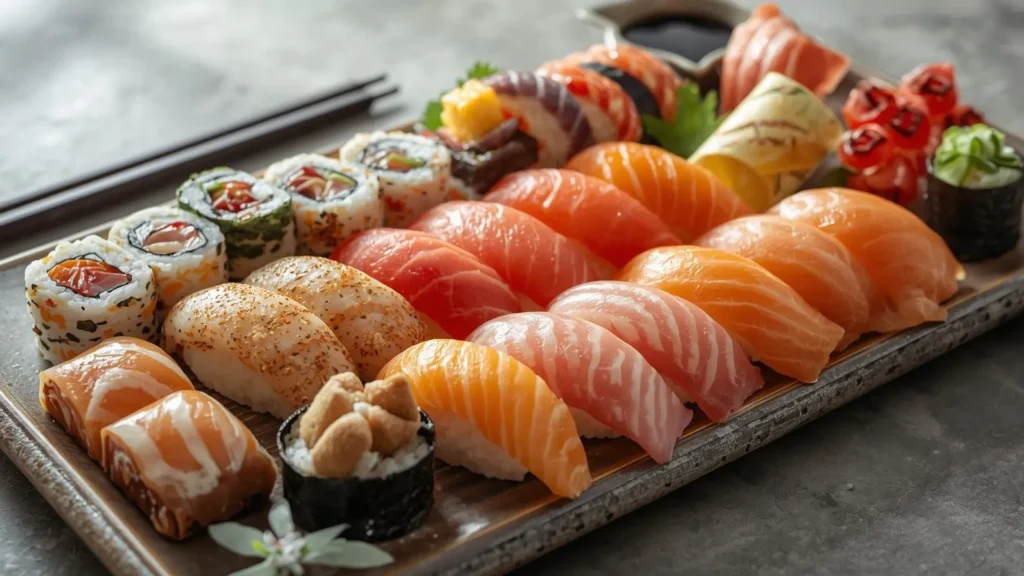
Sashimi and nigiri both feature raw fish and are often found on the same sushi menu, but they are two different dishes in Japanese cuisine. To better understand the differences between sashimi and nigiri, we spoke with Jane Matsumoto, Director of Culinary Arts at the Japanese American Cultural & Community Center (JACCC), and Chris Ono, chef of Hansei at the JACCC.
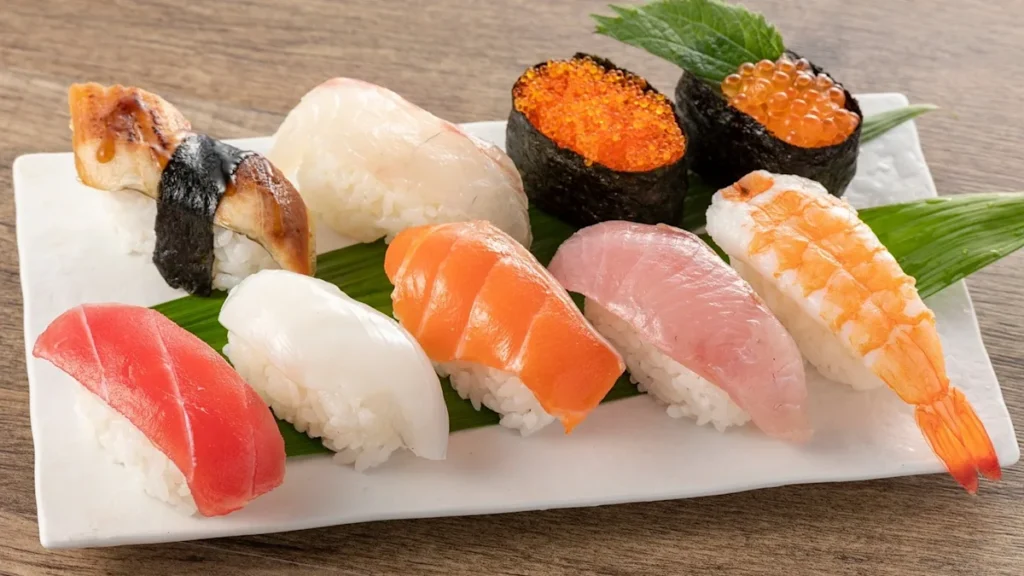
What Is Nigiri?
Nigiri is a small piece of raw fish or seafood placed on top of a hand-shaped mound of vinegared sushi rice. It is designed to be eaten in one bite. Nigiri can be flavored with soy sauce, wasabi, or yuzu kosho. According to Matsumoto, many modern sushi restaurants also use additional ingredients such as Thai chili and other non-traditional herbs and spices.
“Making nigiri is one of the most difficult skills for a sushi chef to master. It takes years of practice to do it consistently,” says Ono. “A skilled sushi chef must shape every piece of rice to the same size and use the right amount of pressure to hold the fish and rice together while keeping the texture soft and delicate when eaten.”
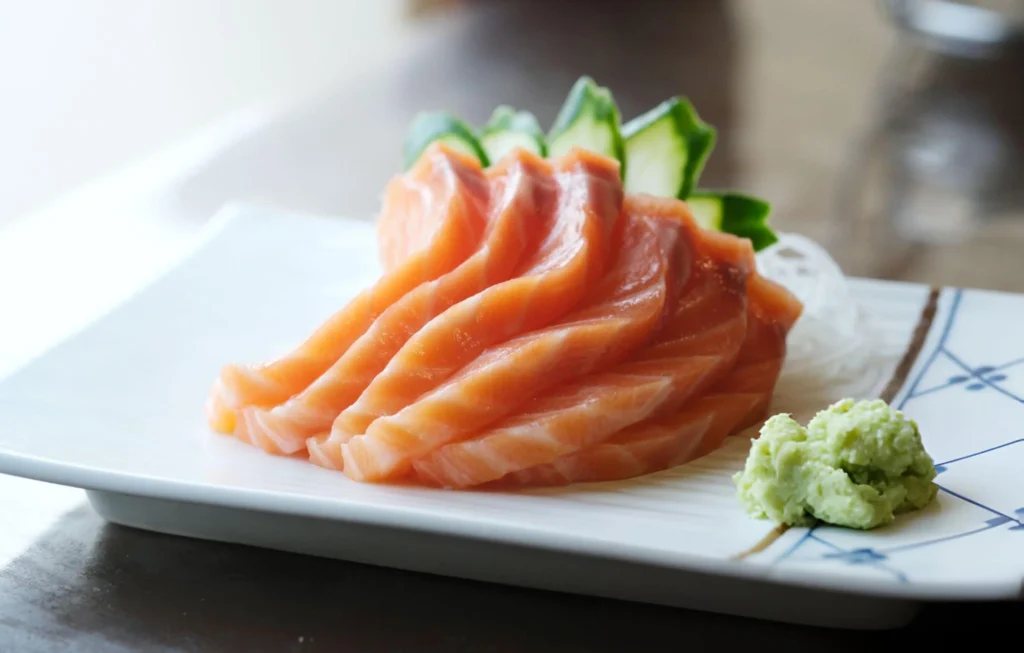
What Is Sashimi?
Sashimi is a traditional Japanese dish made with thin slices of raw fish, seafood, or other proteins. It is usually served on a plate with garnishes such as daikon radish and shiso leaves. Sashimi is often paired with sauces like soy sauce, ponzu, or dashi soyu, along with seasonings such as yuzu kosho, lemon, and sea salt to enhance its flavor.
Check out our What Is Tobiko? primer.
How to Eat Nigiri
Nigiri is meant to be enjoyed in a single bite, and both Ono and Matsumoto explain that it is perfectly acceptable to eat it with your fingers. If you prefer, you can also use chopsticks.
Nigiri is often served with a small dish of soy sauce, but the soy sauce is intended to season only the fish, not the rice. Matsumoto notes that Japanese sushi chefs will sometimes tell guests “no soy sauce” when serving nigiri.
“For people who are not familiar with sushi etiquette, it is considered improper to soak the rice side into a dish filled with soy sauce and wasabi,” Ono explains. “At high-end sushi restaurants, the chef usually brushes the correct amount of soy sauce onto the fish before serving it. That is all that is needed. Many sushi enthusiasts avoid adding extra condiments and trust the chef’s preparation.”
Nigiri vs Sashimi: What Are the Differences?
Although sashimi and nigiri both use raw fish and seafood, they differ in several important ways.
- Serving: Sashimi is served as slices of raw fish by itself, while nigiri consists of a slice of fish placed on top of a mound of vinegared rice.
- Classification: Because nigiri includes vinegared rice, it is considered a type of sushi. Sashimi is a separate dish, although raw fish is commonly used in many sushi varieties.
- Ingredients: Sashimi is always served raw, whether it contains fish, seafood, or another protein. Nigiri may contain raw fish, but it can also include cooked ingredients such as unagi (eel), tamago-yaki (cooked egg), or vegetables.
- Portion: Sashimi is usually served as several slices of the same fish. Nigiri is generally served as a single bite-sized piece.
- Presentation: Sashimi is often presented with seasonal garnishes and a combination of colors and textures that enhance the appearance of the fish. Nigiri is usually served in a simpler style without additional garnishes.
Which Is More Expensive, Nigiri or Sashimi:
In most cases, sashimi is more expensive than nigiri because it contains thicker cuts of fish and a larger amount of protein per serving. While both dishes require a high level of skill to prepare, sashimi often involves more planning and attention to presentation, including garnishes and accompaniments.
“While nigiri refers to a bite-sized piece of sushi rice topped with fish, sashimi is served as several slices of fish in one portion,” Ono says. “Preparing sashimi also requires experience because different types of fish must be cut at different thicknesses. Maintaining consistency is an important part of the process.”