
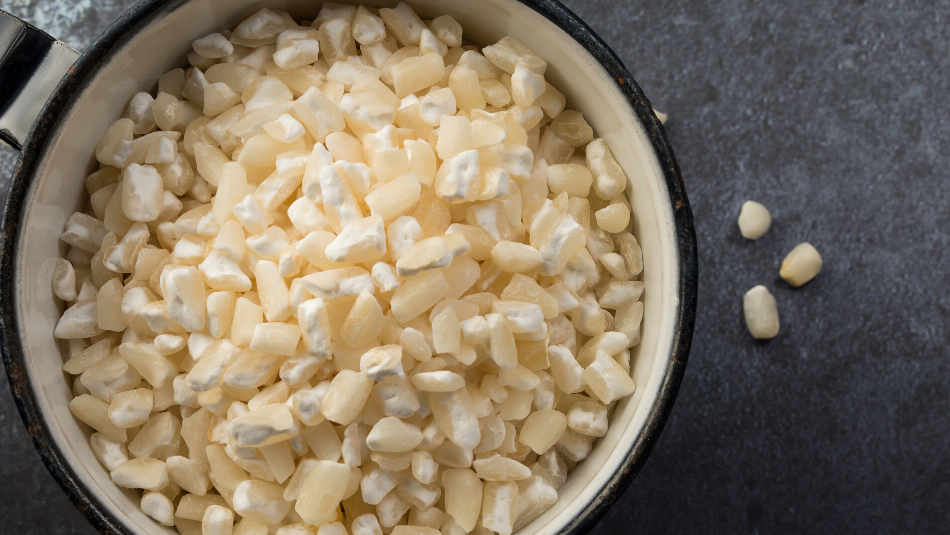
Hominy – what is it? Where does it come from? What does it taste like? How do you cook it? And what should you serve with it? Today, I’m answering all these questions and more!
Hominy is commonly used in Mexican, Tex-Mex, and Southwestern American dishes. The first time I saw it in a recipe, I honestly had no idea what it was. It looks like large corn kernels, which makes sense because it actually is a type of corn. The difference is that the kernels go through a special process (don’t worry, it’s not as complicated as it sounds) that makes them easier to cook and digest.
Hominy is also considered a grain. It’s an important ingredient in traditional homemade grits and is often used in corn tortillas. You’ll also find it in soups and stews. Some chefs even say it tastes better than regular corn, and honestly, I can see why!
What Is Hominy?
Hominy — also known as hominy corn — is made from maize, which is another name for field corn. It usually comes in white or yellow colors. You’ll often see it used in cornmeal, tortillas, corn flakes, and other grain products. Unlike sweet corn, you don’t eat hominy straight from the cob. If you’ve ever had traditional grits, then you’ve already eaten hominy!
Raw hominy is much larger than regular corn kernels. The kernels are usually about the size of a small coin. They have a soft, puffed texture and don’t stick in your teeth like corn on the cob sometimes does.
Hominy is naturally gluten-free, which makes it a great choice for people with gluten sensitivity. The process used to make hominy (which I explain below) also makes it more nutritious than regular corn. It contains higher levels of vitamin B3, also called niacin.
This traditional Mexican grain has been around for thousands of years. Let’s look at how it’s made and how it’s different from regular corn.
Difference Between Corn and Hominy
As I mentioned earlier, hominy is a type of corn that goes through a special process. But what exactly makes it different from regular corn?
Hominy is treated with a process called nixtamalization. It may sound complicated, but it’s actually pretty simple. The word comes from Nahuatl, the language spoken by ancient Mesoamerican people who first created this method. During this process, corn is soaked in an alkaline solution made from lime, lye, or wood ash.
Nixtamalization removes the tough outer skin, or husk, from the corn. It also changes the structure of the grain, making it easier to cook and digest. In my opinion, it also improves the flavor. The process removes the bland outer layer and leaves behind the soft and flavorful inside of the kernel.
After the process, the kernels can be ground into flour. This flour sticks together well when mixed with water, which is why it’s perfect for making homemade corn tortillas.
Most people don’t make hominy from scratch at home anymore, and honestly, I wouldn’t recommend trying it yourself. Luckily, hominy is easy to find in many supermarkets in the US. You can buy it canned or ground for recipes like tortillas, chips, and grits.
Ways To Use Hominy
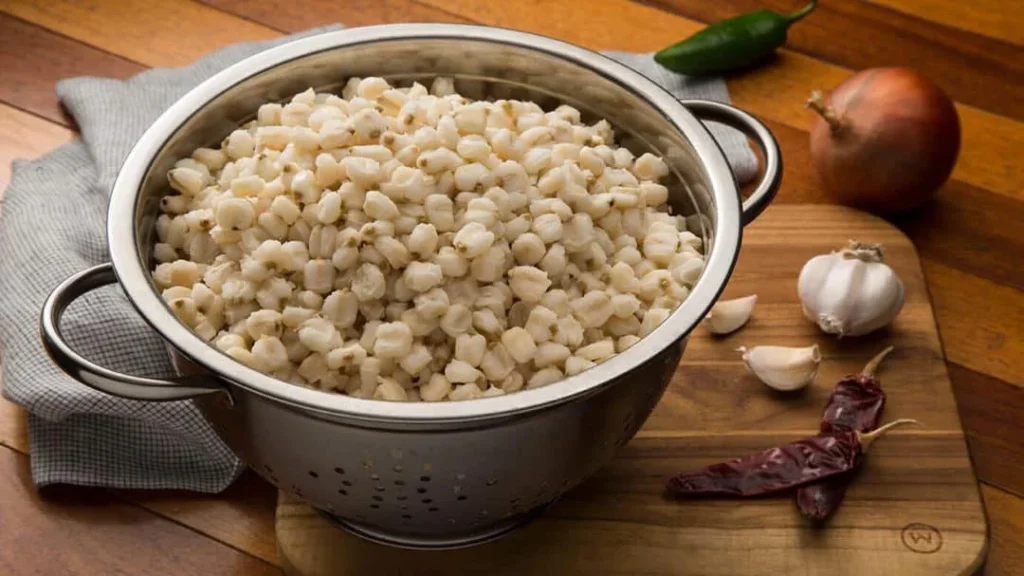
Hominy can be used in many different ways. It has a more earthy and richer flavor compared to sweet corn. You can buy it cooked in a can, as dried kernels, or in ground form.
Dried hominy is cooked the same way as dried beans or lentils. You need to rinse and soak it overnight before boiling it until tender. Once cooked, you can simply eat it with butter, salt, and pepper, just like regular corn. It’s also commonly added to soups, stews, casseroles, drinks, and tortillas.
- Soups & Stews
Chicken Tortilla Soup - Casseroles
Hominy corn casserole - Drinks
Atole, a traditional Mexican breakfast drink made with masa (another name for hominy corn flour) - Grits
Creamy cheese grits or New Orleans shrimp and grits made with hominy instead of regular cornmeal - Tortillas
Corn tortillas and tortilla chips
How Is Hominy Made?
Hominy is made by soaking corn in an alkaline solution such as lime, lye, or wood ash. This process has been used for thousands of years and was first developed by ancient people living in what is now Mexico. The process is called nixtamalization, a word that comes from the ancient Nahuatl language.
If the idea of lime or lye touching your food sounds strange, don’t worry. The corn is washed thoroughly after soaking, leaving behind a soft texture and earthy flavor.
Is Hominy the Same as Chickpeas?
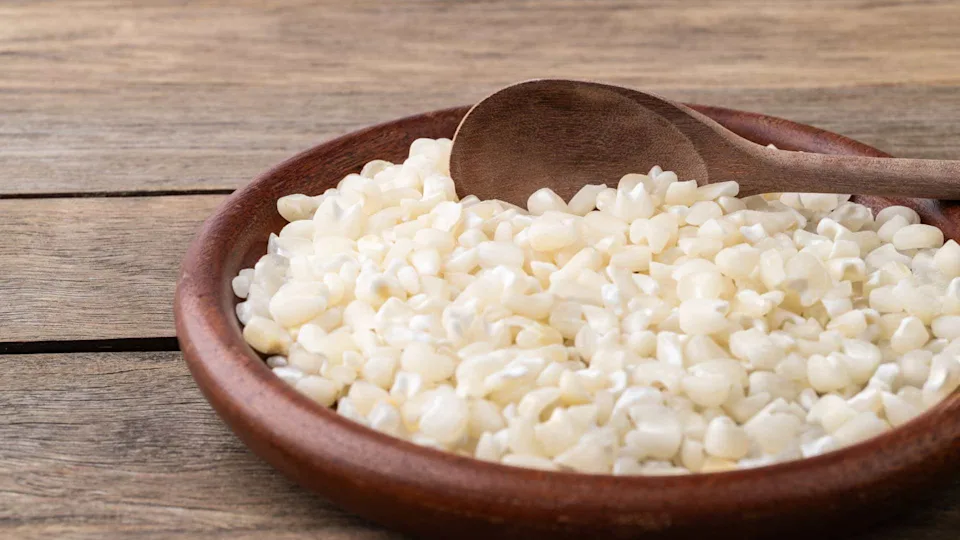
Hominy is often compared to chickpeas because they can look somewhat similar and are prepared in similar ways when dried. But they are actually very different foods.
Hominy is made from field corn that has been soaked in lime, lye, or ash. After soaking, the husk is removed, and the kernels are cooked, dried, or ground into flour. Hominy originally comes from Mexico.
Chickpeas, on the other hand, are legumes, which means they are more closely related to beans. They are packed with protein and are popular in vegetarian and vegan recipes. Also called garbanzo beans, chickpeas come from the Mediterranean region. You can buy them canned, dried, or even as gluten-free flour.
What Can I Substitute for Hominy?
If you can’t find hominy at your local grocery store, I suggest checking online first. But if you still need a replacement, here are a few good options:
- Chickpeas
As mentioned earlier, chickpeas are often compared to hominy. Their texture is a little different because chickpeas are not as puffy, but they do have a similar nutty and grain-like flavor. - Buckwheat Grits
Buckwheat grits work well as a hominy substitute in soups and stews. They also make a tasty side dish. - Polenta
Polenta is probably the best substitute for hominy. It has a similar texture, flavor, and appearance to stone-ground hominy used in grits. You can also use it in tortillas, stews, and tamales. - Corn
Regular corn should only be used as a last option. Even though both come from the same family, sweet corn tastes much sweeter and has a very different texture compared to hominy.